Get additional resources
Order materials, reference guides, clinical reprints, and more
Order onlinePrimary immunodeficiency (PI) diseases occur in patients who have an intrinsic defect in the immune system.1 The immune system may have impaired function in one or more components, or may be absent altogether. Currently, there are more than 550 different types of primary immunodeficiencies recognized—some are common, others are quite rare.2,3 Humoral or antibody PIs account for approximately half of all disorders.1 Because patients with PI do not have fully functioning immune systems, they are more susceptible to infection in the3:

Immunoglobulin replacement therapy (IgRT) is a recommended treatment for patients with significantly impaired antibody production.1 Since IgRT does not cure the underlying cause of PI, repeat doses are required at regular intervals and is usually necessary for the patient's whole life.3
| IVIg therapy |
|---|
| Administered once every 3–4 weeks |
| Reduces the incidence of acute serious bacterial infections (aSBIs) |
| Venous access required |
| Administered by a trained healthcare professional, either in the patient's home or in a medical setting |
| Systemic adverse reactions are common |
| Local site reactions are rare |
Privigen is an IVIg therapy option that allows patients to receive treatment once every 3–4 weeks by their healthcare team—either at home or in a medical setting—as opposed to more frequent treatments that may be self-administered.

Please see Important Safety Information below and full prescribing information, including boxed warning and patient product information.
There are several IVIg products currently available in the United States. While all work to replace missing or defective antibodies, there are some features and attributes to consider when choosing a preparation to stock or prescribe. These include5:

Order materials, reference guides, clinical reprints, and more
Order onlineReferences: 1. Bonilla FA, Khan DA, Ballas ZK, et al. Practice parameter for the diagnosis and management of primary immunodeficiency. J Allergy Clin Immunol. 2015;136(5):1186-205.e2078. doi:10.1016/j.jaci.2015.04.049. 2. Poli MC, Aksentijevich I, Bousfiha AA, et al. Human inborn errors of immunity: 2024 update on the classification from the International Union of Immunological Societies Expert Committee. J Hum Immun. 2025;1(1):e20250003. Published 2025 Apr 15. doi:10.70962/jhi.20250003. 3. Immune Deficiency Foundation (IDF). Understanding primary immunodeficiency: Treatment: Immunoglobulin replacement therapy. https://primaryimmune.org/understanding-primary-immunodeficiency/treatment/immunoglobulin-replacement-therapy. Accessed April 17, 2026. 4. Berger M. Choices in IgG replacement therapy for primary immune deficiency diseases: subcutaneous IgG vs. intravenous IgG and selecting an optimal dose. Curr Opin Allergy Clin Immunol. 2011;11(6):532-538. 5. StatPearls Publishing. (2023). Intravenous immunoglobulin (IVIG). In StatPearls. StatPearls Publishing. https://www.ncbi.nlm.nih.gov/books/NBK554446/. Accessed April 17, 2026.
Chronic inflammatory demyelinating polyneuropathy (CIDP) is a rare disorder of the peripheral nerves characterized by progressive weakness and a loss of sensory and motor function in the arms, legs, hands, and feet. CIDP is a neurological disorder with an underlying autoimmune basis: the immune system perceives the nerves' protective myelin as foreign and attacks it. Damaged or removed myelin prevents effective communication in the nervous system, as electric impulses transmitted to and from the brain are disrupted or lost.1,2



Although CIDP is a chronic disease, Ig therapy can limit the damage to peripheral nerves and help improve motor function. The 2021 EAN/PNS guideline on the diagnosis and treatment of CIDP strongly recommended IVIg as a first-line treatment option.2 IVIg contains naturally occurring antibodies obtained from healthy volunteers and is administered intravenously.
Order materials, reference guides, clinical reprints, and more
Order onlinePlease see Important Safety Information below and full prescribing information, including boxed warning and patient product information.
References: 1. GBS/CIDP Foundation International. Chronic Inflammatory Demyelinating Polyneuropathy (CIDP) 101. https://www.gbs-cidp.org/cidp/. Accessed April 17, 2026. 2. Van den Bergh PYK, van Doorn PA, Hadden RDM, et al. European Academy of Neurology/Peripheral Nerve Society guideline on diagnosis and treatment of chronic inflammatory demyelinating polyradiculoneuropathy: Report of a joint Task Force-Second revision. Eur J Neurol. 2021;28(11):3556-3583. doi:10.1111/ene.14959.
Immune thrombocytopenic purpura (ITP) is an autoimmune disorder resulting in low platelet counts and bleeding. Patients with ITP often exhibit purpura (red, purple, or brownish-yellow spots) in the skin and mucous membranes and petechiae (red or purple dots) under the skin. People with ITP may also experience nosebleeds, gingival bleeding, heavy menstrual bleeding, and hematomas.1 ITP usually does not have an identifiable precipitating stimulus2; it may occur in isolation (primary) or in association with other diseases (secondary).3

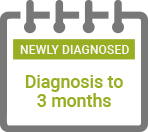
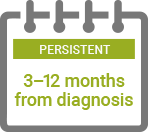
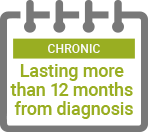
Privigen is indicated for the treatment of chronic ITP in patients aged 15 years and older. At the time of the Privigen pivotal trial, chronic ITP was defined as lasting 6 months or longer, and the disease criteria for that study population followed the earlier (>6 months) definition of chronic ITP.4 See the FAQs for additional information about ITP.

Treatment depends on the platelet count and the frequency and amount of bleeding experienced by the patient. Immunoglobulin therapy is used as a treatment to increase platelet counts.2 Platelet transfusions may be needed in severe cases.2,3
See the clinical trial results for Privigen in chronic ITP
View the studiesReferences: 1. US Dept of Health and Human Services. National Institute of Health. National Heart, Lung and Blood Institute. Immune Thrombocytopenia (ITP). https://www.nhlbi.nih.gov/health/immune-thrombocytopenia. Accessed April 17, 2026. 2. Neunert C, Terrell DR, Arnold DM, et al. American Society of Hematology 2019 guidelines for immune thrombocytopenia. Blood Advances. 2019;3(23):3829-3866. 3. Neunert C, Lim K, Crowther M, et al. The American Society of Hematology 2011 evidence-based practice guideline for immune thrombocytopenia. Blood. 2011;17(6):4190-4207. 4. Robak T, Salama A, Kovaleva L, et al. Efficacy and safety of Privigen®, a novel liquid intravenous immunoglobulin formulation in adolescent and adult patients with chronic immune thrombocytopenic purpura. Hematology. 2009;14(4):227-236.